
Core Aeration in Sydney & Brisbane
Core aeration is the process of pulling small plugs...cores...of soil out of a lawn so the holes left behind let air, water and nutrients reach the root zone instead of running off the top. The cores break back down and return to the soil. It's the fix for compaction, which is the most common reason an otherwise well-fed lawn looks tired: foot traffic, clay soil and heavy rain press soil particles together until roots can't push through and water sheets off rather than soaking in. Coring is not spiking. Spiking pushes a hole in and shoves soil sideways, which compacts it further; coring removes soil, which is what actually relieves the problem. Once the lawn's been mown it's hard to tell from a distance that anything was done...the change happens underneath, with roots following the new channels. It's a stand-alone job rather than a standing appointment...most lawns need it once or twice a year, which is a different rhythm to the lawn care program's run of visits every 10 weeks. It isn't part of the program either, though most program customers have it done at least once a year on top of their visits. It's where Steve and Brian started...aerating lawns through Canadian summers.
The single most effective thing you can do to promote better lawn growth.
It's where Steve and Brian started...aerating lawns through Canadian summers. Compaction is the most common reason an otherwise well-fed lawn looks tired, and no amount of fertiliser fixes it.
What is core aeration?
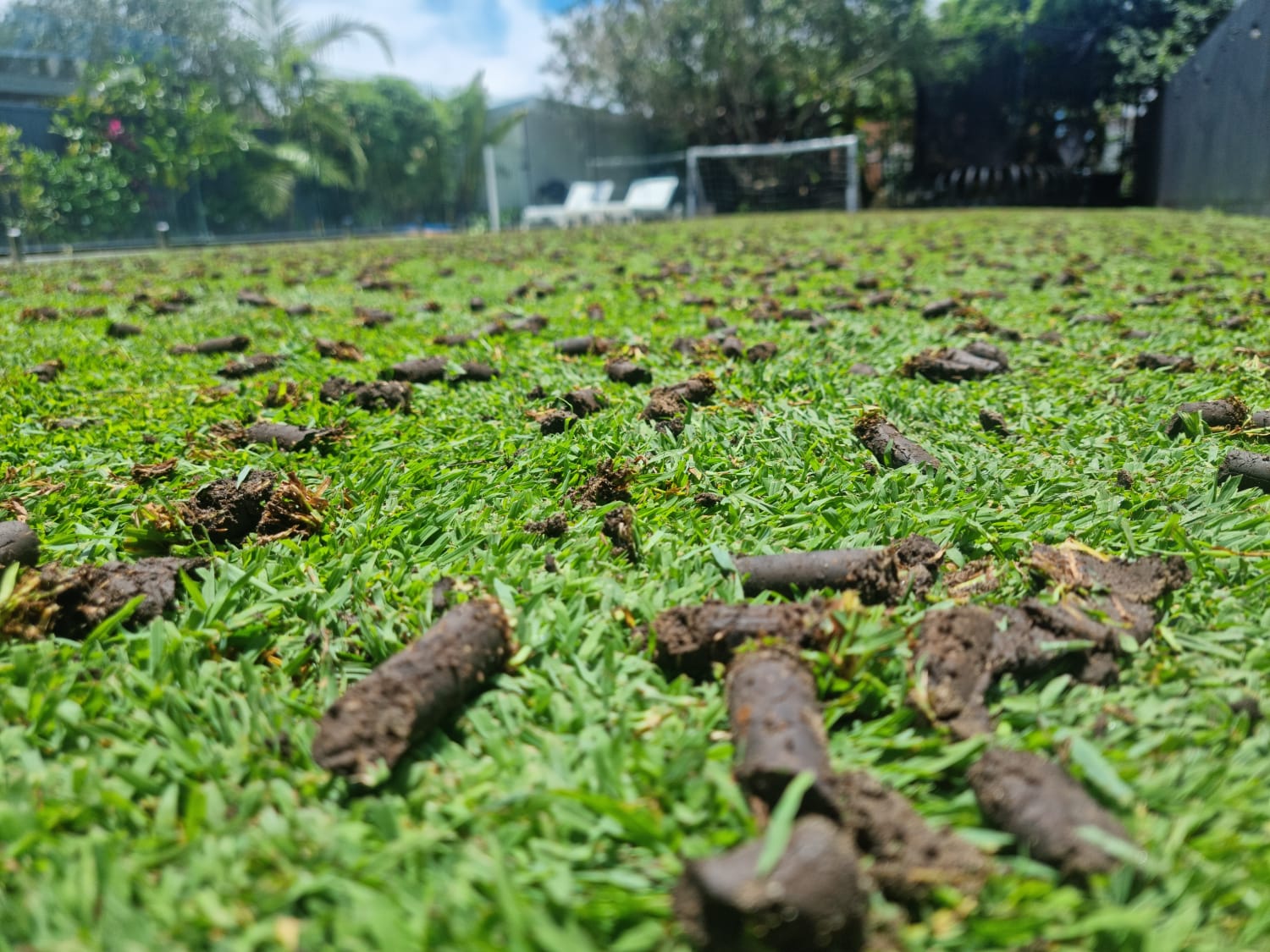
A machine pulls small plugs...cores...of soil out of the lawn and drops them on the surface. That's it. The holes left behind let air, water and nutrients get down to the root zone.
Why does soil compaction damage a lawn?
Foot traffic, clay soil and heavy rain press soil particles together. Roots can't push through it and water runs off instead of soaking in. The lawn looks dry when the problem is underneath.
What's the difference between core aeration and spiking?
Spiking pushes a hole in and shoves the soil sideways, which makes compaction worse. Coring removes soil. Those are different jobs with different results.
What happens to a lawn after aeration?
The cores work their way back into the soil. Roots follow the new channels down, and anything we apply afterwards gets where it's meant to go instead of sitting on top.
Watch
What does core aeration actually do to your soil?
How it runs
What actually happens when you book core aeration?
- 01We check the soil and confirm compaction is what's holding the lawn back.
- 02We core the lawn and leave the plugs to break down.
- 03We follow up with whatever the diagnosis called for...feed, soil amendment.
- 04Clear communication after each visit, including what to expect over the next few weeks.
A stand-alone job rather than a standing appointment...usually once or twice a year. Book it into the window when the lawn is actively growing so it recovers quickly, which in Sydney and Brisbane is essentially the start of Spring to the end of Autumn. It sits outside the lawn care program rather than inside it...most program customers choose to have it done at least once a year, and we book the pass your lawn needs alongside the program's visits every 10 weeks.
Rosemary Rowston's lawn was turned around by Brian and the team, who do the Brisbane aeration work.
FAQ
Questions people actually ask
What is core aeration?
A machine pulls small plugs...cores...of soil out of the lawn and drops them on the surface. The holes left behind let air, water and nutrients reach the root zone instead of running off the top.
How often should I aerate my lawn?
Core aeration is a stand-alone job rather than something on a repeat schedule...most lawns need it once or twice a year. Whether yours wants one pass or two comes out of the diagnosis: we check the soil and tell you straight. It's a different rhythm to the lawn care program, which runs every 10 weeks, and it isn't included in the program itself...most program customers opt to have it done at least once a year, and we book it in alongside their visits.
What's the difference between core and spike aeration?
Coring removes soil. Spiking pushes a hole in and shoves the soil sideways, which compacts it further. They're different jobs with different results, and only one of them relieves compaction.
Will my lawn look worse right after aeration?
No. The cores go back down into the soil rather than sitting on top of it, and once the lawn's been mown it's hard to tell from a distance that anything happened at all. The change happens underneath, with roots following the new channels down, and the lawn keeps growing through it either way.
Do you pick up the plugs afterwards?
No...they break back down and return to the soil, which is where the organic matter belongs. Raking them off throws away the best part of the job.
Does my lawn need aeration or just more fertiliser?
That's what the diagnosis is for. If the problem is compaction, more fertiliser won't fix it...water runs off instead of soaking in and roots can't push through. We check the soil first and tell you which one you've got.
What time of year should a lawn be aerated in Sydney or Brisbane?
Any time the grass is actively growing, which in Sydney and Brisbane is essentially the start of Spring to the end of Autumn. That's when the lawn can push new roots into the holes the cores leave behind. Once it slows down for Winter there's nothing growing into them, so we'd rather wait and do it when the lawn can use it.
What does core aeration cost?
If you give us the lawn's size in square metres when you first get in touch, we can put a pretty accurate quote to you from that...so long as the size is right, the number holds. We measure up on the day too and confirm the price with you before we start, so there's nothing tacked on afterwards.
Book it in your city
Get a free lawn diagnosis
The Guys come out, work out why your lawn is doing what it's doing, and tell you straight. You get the findings whether you book in or not. No lock-in either way.